Smart Kitchen Equipment Solutions for Modern Restaurants and Central Kitchens
The global food service industry is entering a new era of automation and intelligent kitchen management. Restaurants, central kitchens, and food production facilities are increasingly adopting smart kitchen equipment solutions to improve operational efficiency, reduce labor dependency, and maintain consistent food quality.
As customer demand continues to grow and labor shortages become more challenging, traditional kitchen systems are no longer enough to support modern commercial food operations. Businesses now require intelligent cooking systems that can automate repetitive tasks, standardize food production, and increase productivity.
Smart kitchen equipment has become one of the most important investments for restaurants and food businesses looking to remain competitive in the modern market.
What Is Smart Kitchen Equipment?
Smart kitchen equipment refers to intelligent commercial kitchen systems that use automation technology, digital controls, and AI-powered cooking solutions to improve kitchen operations.
Unlike traditional cooking equipment, smart kitchen systems are designed to optimize workflow, reduce manual labor, and improve food consistency through advanced automation features.
Modern smart kitchen equipment may include:
- Automatic cooking machines
- AI cooking robots
- Intelligent temperature control systems
- Automated stir-fry machines
- Smart touchscreen control panels
- Multi-station cooking systems
- Central kitchen automation systems
These technologies help restaurants modernize their kitchens and improve operational performance.
Why Modern Restaurants Need Smart Kitchen Solutions
Restaurants today face increasing operational pressure due to rising labor costs, higher customer expectations, and the growing need for efficiency.
Traditional kitchen systems often rely heavily on experienced chefs and manual cooking processes. While skilled chefs remain important, depending entirely on manual operations can create challenges for large-scale businesses.
Smart kitchen equipment provides practical solutions for these problems.
Rising Labor Costs
One of the biggest challenges in the restaurant industry is increasing labor expenses.
Restaurants must invest heavily in:
- Chef salaries
- Employee training
- Staff management
- Recruitment costs
In many countries, finding experienced kitchen staff is becoming more difficult every year.
Smart kitchen automation helps reduce dependency on manual labor while improving production efficiency. Automatic cooking machines can handle repetitive cooking tasks with minimal supervision.
Inconsistent Food Quality
Food consistency is critical for customer satisfaction and brand reputation.
Manual cooking methods often create differences in:
- Flavor
- Texture
- Portion size
- Cooking temperature
AI cooking robots solve this problem by using programmed recipes and precise cooking controls. Every dish follows the same process, ensuring stable quality and taste.
This is especially important for restaurant chains and franchise businesses.
Slow Production During Peak Hours
Busy restaurants often struggle with slow order preparation and overloaded kitchen operations.
Smart kitchen equipment helps increase cooking speed and production capacity by automating repetitive processes.
Multi-station cooking systems can prepare several dishes simultaneously, allowing kitchens to operate more efficiently during high-demand periods.
Benefits of Smart Kitchen Equipment
Modern kitchen automation systems provide many long-term advantages for restaurants and food production businesses.
Improve Kitchen Efficiency
Automation reduces unnecessary manual work and improves workflow organization.
Restaurants can:
- Prepare meals faster
- Reduce cooking delays
- Improve production planning
- Increase operational productivity
This helps businesses serve more customers efficiently.
Standardize Food Production
Maintaining consistent food quality across multiple locations is one of the biggest challenges for restaurant chains.
Smart cooking systems use automated recipe programming and temperature control to standardize production.
This ensures every customer receives the same food experience regardless of location.
Reduce Operational Costs
Although automation systems require initial investment, they significantly reduce long-term operating costs.
Businesses can lower:
- Labor expenses
- Ingredient waste
- Production errors
- Training costs
- Kitchen inefficiencies
Automation improves overall profitability and operational stability.
Improve Kitchen Safety and Hygiene
Food safety is becoming increasingly important worldwide.
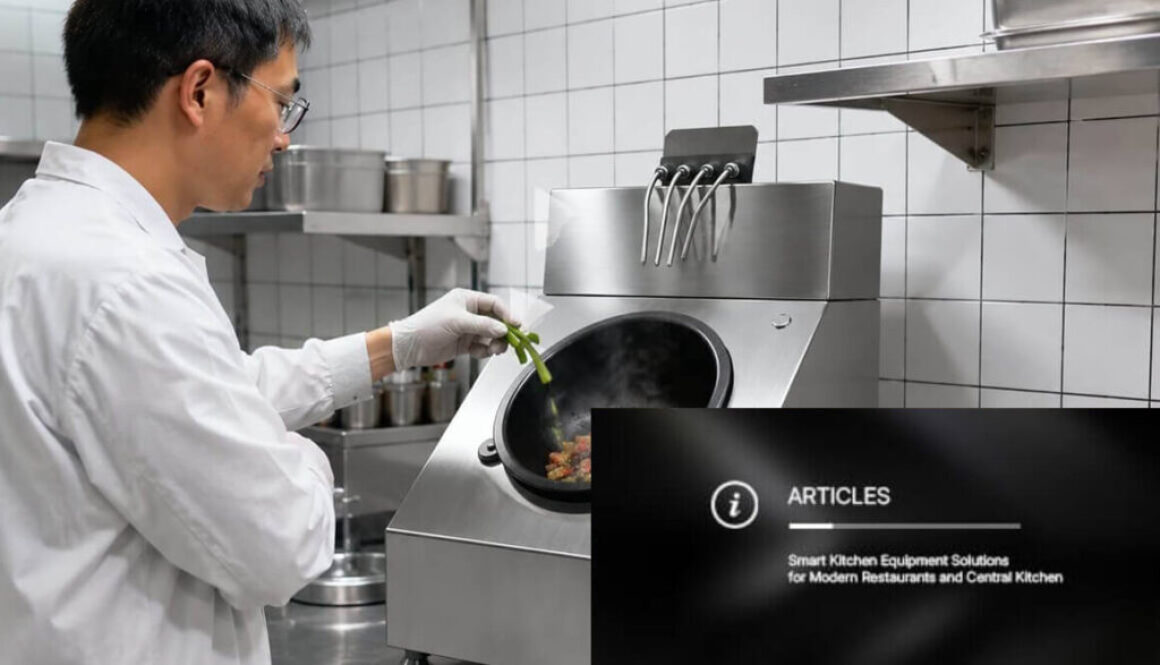
Smart kitchen equipment reduces direct human contact with food during preparation and cooking. Automated systems also help minimize workplace accidents caused by high heat and manual cooking processes.
Many commercial cooking systems are designed with stainless steel structures for easy cleaning and hygienic operation.
Automatic Cooking Machines for Commercial Kitchens
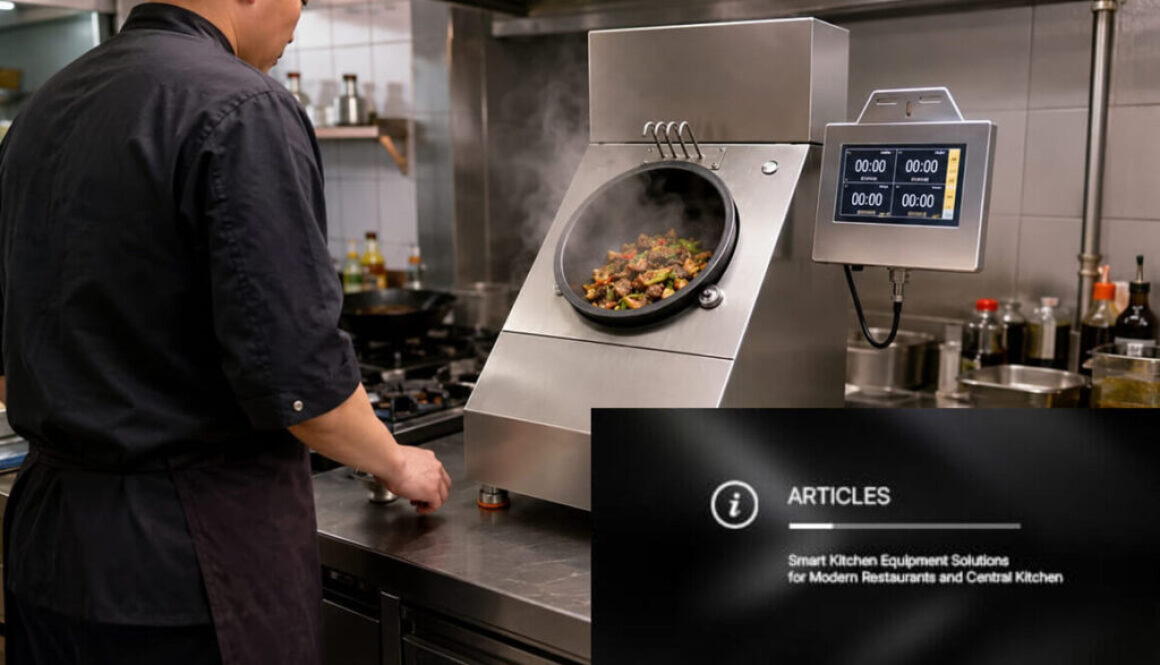
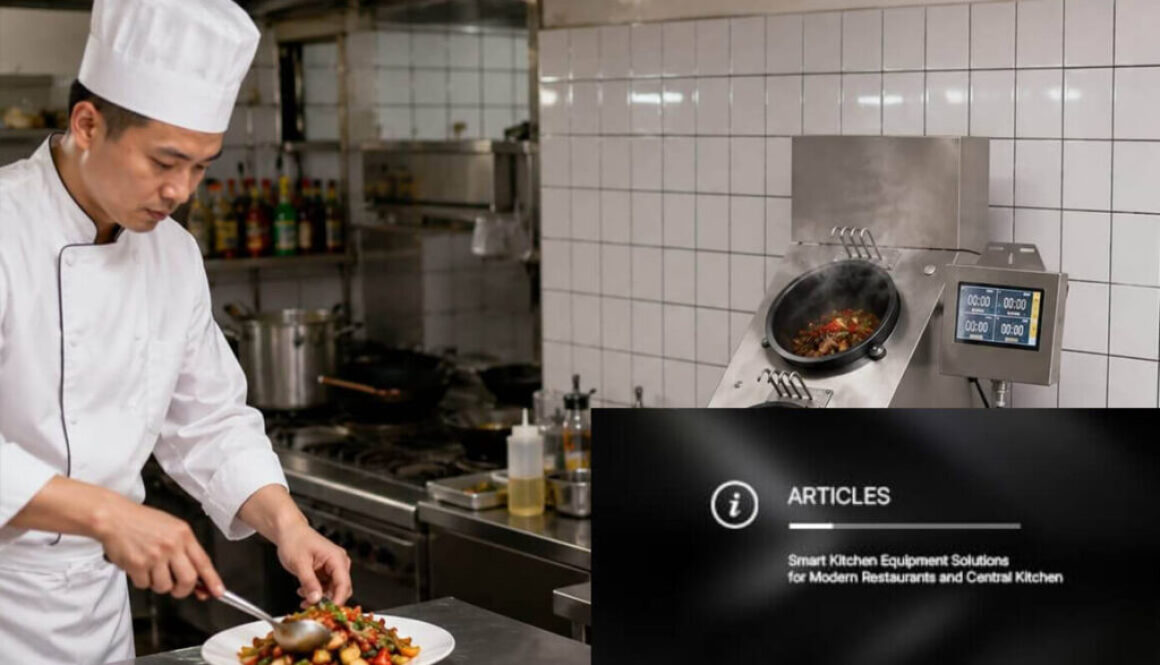
One of the most important innovations in smart kitchen technology is the automatic cooking machine.
These machines are designed specifically for:
- Restaurants
- Central kitchens
- Food factories
- Catering businesses
- Cloud kitchens
Automatic cooking machines use intelligent systems to automate:
- Stir-frying
- Heating
- Mixing
- Timing
- Temperature control
This allows kitchens to maintain stable production quality while improving efficiency.
AI Cooking Robots and Intelligent Automation
Artificial intelligence is becoming a major part of modern commercial kitchens.
AI cooking robots can:
- Store multiple recipes
- Automatically control heat levels
- Monitor cooking duration
- Adjust cooking settings
- Improve production efficiency
Some advanced systems even allow restaurants to customize cooking programs based on menu requirements.
As AI technology continues to develop, intelligent kitchen automation will become even more advanced and efficient.
Smart Kitchen Solutions for Central Kitchens
Central kitchens require large-scale production systems that can operate efficiently and consistently.
Manual cooking alone is often inefficient for high-volume food preparation.
Smart kitchen equipment helps central kitchens:
- Increase production capacity
- Standardize recipes
- Improve workflow management
- Reduce labor dependency
- Maintain stable food quality
This is particularly useful for:
- Restaurant chains
- Airline catering
- Food delivery businesses
- Institutional catering
- Food manufacturing companies
The Future of Smart Commercial Kitchens
The future of the food service industry is strongly connected to automation and intelligent kitchen management.
Several global trends are driving demand for smart kitchen equipment:
- Rising labor costs
- Labor shortages
- Expansion of restaurant chains
- Demand for food consistency
- Growth of cloud kitchens
- Need for operational efficiency
Restaurants that adopt automation technology early can gain significant competitive advantages.
Smart kitchen equipment allows businesses to:
- Scale operations faster
- Improve customer satisfaction
- Reduce operational risks
- Increase productivity
- Improve profitability
As commercial kitchens continue evolving, intelligent cooking systems will become standard equipment in many food businesses worldwide.
Choosing the Right Smart Kitchen Equipment
When selecting smart kitchen solutions, businesses should consider several factors.
Production Requirements
Choose equipment based on daily cooking volume and operational needs.
Kitchen Space
Ensure the equipment fits the available commercial kitchen layout.
Ease of Operation
User-friendly systems reduce training time and improve productivity.
Maintenance Support
Reliable after-sales service is important for long-term operation.
Scalability
Choose automation systems that support future business expansion.
Working with experienced commercial kitchen automation providers can help businesses select the most suitable solution.
Conclusion
Smart kitchen equipment solutions are transforming the modern restaurant industry. Automatic cooking machines and AI cooking robots help restaurants and central kitchens improve efficiency, reduce labor costs, and maintain consistent food quality.
As the food industry becomes more competitive, kitchen automation is no longer just an optional upgrade. It is becoming an essential investment for businesses that want to modernize operations and remain competitive in the future.
From restaurants and catering businesses to central kitchens and food factories, smart kitchen equipment provides scalable and intelligent solutions for modern food production.